One Sentence Memory Line
Zechariah calls God’s people to repentance and faith by revealing that restoration, righteousness, and the coming King are secured by the Lord Himself.
Historical Setting
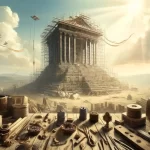
The book of Zechariah is set during the post-exilic period, around 520 to 518 BC, when the Jewish people had returned from Babylonian captivity under Persian rule. The temple in Jerusalem lay unfinished, and discouragement weighed heavily upon the returned exiles. Alongside the prophet Haggai, Zechariah ministered to stir the people toward rebuilding the temple and restoring covenant faithfulness. His ministry addressed both the physical rebuilding of Jerusalem and the deeper spiritual renewal of the people. Ministers should note that Zechariah speaks into a community that had returned geographically, yet still struggled to return spiritually.
Canonical Placement
Zechariah is the eleventh book among the Minor Prophets in the Old Testament. Though labeled “minor” due to length, its theological weight is substantial. It stands near the conclusion of the prophetic corpus, preparing readers for the silence that follows before the New Testament. Its position signals a transition from immediate restoration concerns to forward-looking messianic expectation.
Redemptive History Placement
Zechariah operates in the restoration phase of redemptive history. Israel has been judged, exiled, and now partially restored. Yet the promises of full redemption remain unfulfilled. This tension becomes the fertile ground for Zechariah’s visions, which stretch beyond the immediate rebuilding project to the ultimate coming of the Messiah and the final establishment of God’s kingdom.
Covenant Context
The book unfolds within the framework of the Abrahamic, Mosaic, and Davidic covenants. God remains faithful to His promises despite Israel’s failures. Zechariah reinforces that covenant blessing is tied to repentance and obedience, yet ultimate fulfillment depends upon God’s sovereign initiative. The tension between human responsibility and divine sovereignty quietly pulses throughout the book.
Purpose of the Book
Zechariah was written to encourage the returned exiles to complete the temple, to call them to genuine repentance, and to assure them that God’s redemptive plan was still unfolding. The prophet lifts their eyes beyond bricks and mortar to a future shaped by divine intervention, where God Himself secures righteousness and establishes His kingdom.
Central Message
The central message of Zechariah is that God will restore His people and establish His kingdom through His chosen King, not by human strength but by His Spirit.
Key Insight: The rebuilding of the temple is not the final goal, it is a signpost pointing to a greater restoration that only the Messiah can accomplish.
Major Themes
Repentance and Return: Zechariah begins with a call to return to the Lord, emphasizing that spiritual renewal precedes outward restoration.
Divine Sovereignty: God orchestrates history, governs nations, and fulfills His purposes despite human weakness.
Messianic Hope: The book contains some of the clearest Old Testament prophecies about the coming Messiah, including His humility, rejection, and ultimate reign.
Holiness and Cleansing: God provides a means for the removal of sin, highlighting the necessity of purification for covenant relationship.
Literary Genre
Zechariah combines prophetic proclamation with apocalyptic visions. The first half contains symbolic night visions filled with imagery, while the latter chapters shift toward prophetic oracles concerning the future. Ministers should approach the imagery with careful interpretation, recognizing that symbols convey theological realities rather than literal descriptions.
Literary Structure
The book divides naturally into two sections. Chapters 1 through 8 focus on visions and immediate encouragement for rebuilding, while chapters 9 through 14 present future-oriented prophecies concerning the Messiah and the final kingdom of God.
Structural Outline
- Call to repentance (1:1 to 6)
- Eight night visions (1:7 to 6:15)
- Questions about fasting and obedience (7 to 8)
- Messianic and eschatological prophecies (9 to 14)
Major Characters or Figures
Zechariah, the prophet, serves as the primary human voice. Joshua the high priest represents spiritual leadership, while Zerubbabel, the governor, symbolizes political leadership. Both figures point beyond themselves to the ultimate Priest-King, the Messiah.
Major Events
Key events include the series of night visions, the symbolic crowning of Joshua, and prophetic declarations concerning the coming King. These events are less historical narrative and more visionary revelations that communicate theological truth.
Key Verses
“Not by might, nor by power, but by my Spirit, says the Lord of hosts.” Zechariah 4:6 (ESV)
“Rejoice greatly, O daughter of Zion! Shout aloud, O daughter of Jerusalem! Behold, your king is coming to you; righteous and having salvation is he, humble and mounted on a donkey.” Zechariah 9:9 (ESV)
“They will look on me, on him whom they have pierced.” Zechariah 12:10 (ESV)
Christological Connection
Zechariah stands as a rich reservoir of messianic prophecy. The coming King is portrayed as humble, riding on a donkey, yet also as a divine figure who is pierced. This dual portrayal anticipates Jesus Christ, who enters Jerusalem in humility and is later crucified. Zechariah also presents the Messiah as both priest and king, uniting roles that were previously distinct. This fusion reaches its fulfillment in Christ, who mediates between God and humanity while reigning with authority.
Biblical Theology Contribution
Zechariah contributes significantly to biblical theology by bridging Old Testament prophecy with New Testament fulfillment. It deepens the understanding of the Messiah’s role, the nature of God’s kingdom, and the necessity of divine intervention in redemption. It also reinforces that God’s purposes move forward even when His people feel stalled or discouraged.
Canonical Connections
Zechariah connects closely with Haggai, Ezra, and Nehemiah in its historical setting. Its messianic prophecies are echoed in the Gospels, particularly in the accounts of Jesus’ triumphal entry and crucifixion. The imagery of cleansing and restoration also resonates with themes found in Revelation.
Doctrinal Significance
Doctrinal Definition: Divine restoration is the work of God whereby He renews His people spiritually and establishes them in righteousness through His appointed Messiah.
Zechariah affirms doctrines of divine sovereignty, messianic fulfillment, and the necessity of repentance. It also highlights the doctrine of justification through divine cleansing rather than human effort. The message presses ministers to resist the subtle temptation of relying on organizational strength while neglecting spiritual dependence.
Teaching Outline for Ministry
- Call to repentance and covenant renewal
- God’s vision for restoration
- The role of Spirit over human strength
- The coming King and His mission
- Future hope and final victory
Ministry Leadership Insight
Zechariah offers a quiet but firm correction to leadership models driven by visible results alone. The prophet reminds leaders that God’s work advances not through sheer force of effort but through dependence on His Spirit. A ministry may rebuild structures, expand programs, and still miss the deeper call to spiritual renewal. Zechariah gently dismantles the illusion that progress equals faithfulness.
Ministry and Life Application
Ministers must examine whether their work is driven by strategy alone or by reliance upon the Spirit. Zechariah invites leaders to cultivate repentance, trust God’s timing, and anchor their hope in Christ rather than immediate results.
Common Misinterpretations or Debates
Some readers overly literalize the symbolic visions, while others dismiss them as purely imaginative. A balanced approach recognizes that the imagery communicates real theological truths through symbolic language. Another debate centers on the interpretation of chapters 9 through 14, particularly regarding their timing and fulfillment. Ministers should approach these passages with humility, acknowledging both clarity in core truths and complexity in details.
Teaching Keywords
Restoration, repentance, Messiah, temple, Spirit, sovereignty, cleansing, kingdom, prophecy, hope.
Summary Paragraph
Zechariah stands as a theological bridge between present struggle and future glory. It calls God’s people to repentance while assuring them that restoration ultimately depends on God’s initiative. The book lifts the weary eyes of ministers and congregations alike, reminding them that the work of God is sustained not by human strength but by His Spirit, and fulfilled through the coming King who secures righteousness, redemption, and the final establishment of God’s kingdom.
Sources
The Holy Bible, English Standard Version. (2016). Crossway.
Boyce, J. P. (2006). Abstract of Systematic Theology. Founders Press.
Boyd, G. A., & Eddy, P. R. (2009). Across the Spectrum. Baker Academic.
Easton, M. G. (1897). Easton’s Bible Dictionary.
Willmington, H. L. (1999). Willmington’s Guide to the Bible. Tyndale House.
Bromiley, G. W. (Ed.). (1985). Theological Dictionary of the New Testament (Abridged). Eerdmans.