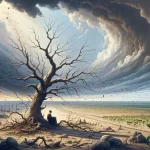
Wisdom on Life Under the Sun
One Sentence Memory Line
Ecclesiastes teaches that life pursued apart from the fear of God is ultimately empty, yet life received as God’s gift becomes meaningful when lived in reverence, wisdom, and obedience.
Historical Setting
Ecclesiastes is traditionally associated with Solomon, the son of David and king in Jerusalem, who is described within the book as “the Preacher” or “Qoheleth,” meaning one who gathers or addresses an assembly. The internal descriptions of immense wisdom, wealth, and royal authority strongly resemble the historical portrait of Solomon in the Old Testament narrative. Although some scholars debate later editorial shaping, the traditional understanding places the reflective voice of Ecclesiastes within the Solomonic era of Israel’s united monarchy during the tenth century BC.
The setting reflects a period of extraordinary prosperity and intellectual exploration. Solomon possessed resources that allowed him to pursue every imaginable avenue of human fulfillment. Wealth, architecture, agriculture, knowledge, pleasure, and political power were all within his reach. Ecclesiastes therefore reads like the testimony of a man who experimented with life at its highest levels and then reflected deeply on what truly satisfies the human soul.
Canonical Placement
Ecclesiastes belongs to the Wisdom Literature of the Old Testament alongside Job and Proverbs. These books address the problem of human existence through the lens of divine wisdom. Rather than narrating historical events or legal commands, wisdom literature explores how people live wisely within God’s created order.
Within the Hebrew canon Ecclesiastes is part of the Megilloth, the five scrolls traditionally read during Jewish festivals. Its placement among wisdom writings highlights its role as a philosophical reflection on the meaning of life and the limits of human understanding.
Redemptive History Placement
Ecclesiastes stands at a unique place in redemptive history. It emerges during Israel’s monarchy when the covenant people were experiencing prosperity and cultural influence. At this stage the nation possessed the temple, the throne of David, and the wisdom traditions of Israel.
Yet the book exposes the insufficiency of earthly success to answer humanity’s deepest questions. Even within covenant blessing, the human heart still wrestles with mortality, injustice, and meaning. Ecclesiastes therefore prepares readers for the fuller revelation of redemption that will ultimately come through Christ.
Covenant Context
The covenant framework behind Ecclesiastes is the Mosaic covenant governing Israel’s life with God. The Preacher observes life within the covenant community yet analyzes human experience through the phrase “under the sun,” meaning life viewed from an earthly perspective.
The tension throughout the book lies between human observation and divine revelation. The covenant teaches that life finds its meaning in obedience to God, yet the Preacher explores what happens when people attempt to discover meaning through human achievement alone.
Purpose of the Book
The purpose of Ecclesiastes is to expose the futility of life pursued independently of God while directing readers toward reverent dependence upon the Creator. By examining wealth, pleasure, wisdom, labor, and achievement, the book dismantles the illusion that human effort alone can produce lasting fulfillment.
The repeated phrase “vanity of vanities” summarizes this conclusion. The Hebrew word translated vanity refers to vapor or breath, something momentary and elusive. The Preacher therefore confronts the illusion of permanence in human pursuits.
Key Insight
Ecclesiastes does not promote despair. Instead it dismantles false sources of meaning so that the reader will rediscover life as a gift from God and not as a product of human control.
Central Message
The central message of Ecclesiastes is that human life cannot be understood correctly without reference to God. When life is evaluated purely from an earthly perspective, everything appears cyclical, temporary, and ultimately unsatisfying. However, when life is received as a gift from the Creator, even ordinary experiences such as work, food, and relationships become meaningful expressions of divine grace.
Major Themes
Several themes dominate the theological reflection of Ecclesiastes. The first is the brevity of human life. The Preacher repeatedly reminds readers that time moves swiftly and that generations come and go.
A second theme is the limitation of human wisdom. Although wisdom is valuable, it cannot ultimately solve the deepest mysteries of existence. Even the wisest person remains finite.
A third theme is divine sovereignty. God controls time, seasons, and outcomes in ways that remain beyond human manipulation.
A final theme is the call to fear God. Reverence toward the Creator provides the foundation for a meaningful life.
Literary Genre
Ecclesiastes belongs to the genre of wisdom literature and philosophical reflection. The book includes poetic observations, proverbs, narrative reflection, and rhetorical questions. The style often resembles the reflective voice of a teacher examining life through observation and experience.
Literary Structure
The structure of Ecclesiastes moves between personal reflection and general wisdom teaching. The Preacher examines different avenues of human pursuit, evaluates their results, and then draws theological conclusions. This cyclical pattern mirrors the recurring nature of life itself.
Structural Outline
Teaching Outline
- Prologue and theme of vanity (1:1–11)
- The search for meaning through wisdom and pleasure (1:12–2:26)
- God’s sovereignty over time and human limitations (3:1–5:20)
- Observations about injustice, wealth, and mortality (6:1–8:17)
- The certainty of death and the call to wise living (9:1–11:10)
- Final exhortation to remember the Creator (12:1–14)
Major Characters or Figures
The primary voice throughout Ecclesiastes is the Preacher or Teacher, traditionally identified with Solomon. Rather than narrating multiple characters, the book centers on the reflective observations of this wise ruler as he considers the meaning of human existence.
Major Events
Ecclesiastes does not narrate historical events in the conventional sense. Instead the “events” of the book consist of intellectual and experiential experiments. The Preacher describes his pursuit of wisdom, pleasure, labor, and accomplishment. Each experiment reveals that these pursuits alone cannot satisfy the human soul.
Key Verses
“Vanity of vanities, says the Preacher, vanity of vanities. All is vanity.” Ecclesiastes 1:2 (ESV)
“For everything there is a season, and a time for every matter under heaven.” Ecclesiastes 3:1 (ESV)
“The end of the matter, all has been heard. Fear God and keep his commandments, for this is the whole duty of man.” Ecclesiastes 12:13 (ESV)
Christological Connection
Ecclesiastes prepares the way for Christ by revealing the limitations of human wisdom and achievement. The search for meaning described in the book ultimately finds its answer in the person of Jesus Christ, who reveals the fullness of life in fellowship with God.
The New Testament echoes this perspective when Jesus declares that true life is found not in earthly abundance but in relationship with God. Christ provides the eternal perspective that Ecclesiastes anticipates.
Biblical Theology Contribution
Ecclesiastes contributes to biblical theology by confronting humanity with the limits of worldly meaning. It forces readers to acknowledge the reality of death, injustice, and uncertainty. In doing so, the book directs attention toward God as the ultimate source of purpose.
Canonical Connections
Ecclesiastes connects with Proverbs through its exploration of wisdom, though it takes a more reflective tone. It also resonates with Job in its wrestling with suffering and mystery. Together these wisdom books present a multifaceted view of life under God’s rule.
Doctrinal Significance
The book emphasizes several important doctrinal truths including the sovereignty of God, the limitations of human wisdom, and the reality of divine judgment. Ecclesiastes also affirms the goodness of creation by encouraging people to enjoy life’s gifts as blessings from God.
Teaching Outline for Ministry
Ministry Teaching Outline
- The futility of life without God
- The limits of wisdom and achievement
- The sovereignty of God over time
- The call to enjoy God’s gifts
- The final call to fear God and obey Him
Ministry Leadership Insight
Ecclesiastes reminds ministry leaders that success measured by human standards is not the ultimate measure of faithfulness. Leaders must resist the temptation to evaluate ministry solely through visible outcomes. Instead, faithfulness to God’s calling and reverence toward Him remain the true measures of spiritual leadership.
Ministry and Life Application
Ministry Application
Ecclesiastes equips ministers to address existential questions that many people face. When individuals struggle with purpose, success, or disappointment, this book provides a biblical framework for understanding life’s complexities. It encourages believers to enjoy God’s gifts, remain humble before divine mystery, and live with eternal perspective.
Common Misinterpretations or Debates
Some readers mistakenly interpret Ecclesiastes as promoting pessimism or nihilism. However, the book actually critiques a worldview that excludes God. The repeated observations of vanity expose the emptiness of life apart from divine purpose rather than denying the goodness of life itself.
Teaching Keywords
Vanity, wisdom literature, fear of God, divine sovereignty, mortality, human limitations, meaning of life, time and eternity.
Summary
Ecclesiastes offers one of the most honest reflections on human existence in the Bible. By examining the limits of wealth, wisdom, pleasure, and achievement, the Preacher demonstrates that life pursued apart from God cannot satisfy the human heart. Yet the book also affirms that life becomes meaningful when received as a gift from the Creator and lived in reverent obedience to Him. For ministers, Ecclesiastes provides a powerful framework for addressing life’s deepest questions while pointing people toward the enduring hope found in God.
Sources
Boyd, G., & Eddy, P. (2009). Across the spectrum: Understanding issues in evangelical theology. Baker Academic.
Easton, M. (1897). Easton’s Bible dictionary. Thomas Nelson.
The Holy Bible, English Standard Version. (2016). Crossway.
Willmington, H. (2014). Willmington’s guide to the Bible. Tyndale House.
Vine, W. E. (1996). Vine’s complete expository dictionary of Old and New Testament words. Thomas Nelson.
Bromiley, G. (Ed.). (1985). Theological dictionary of the New Testament (abridged). Eerdmans.