

Skip to content
Ministry Manual
  • Browse
    • About the Manual
    • About NACM
    • FAQ
    • Return to Fellowship
  • Bible, People, Facts
    • Minister Summary of the Old Testament for Pastors
    • Minister Summary of the New Testament for Pastors
  • Theology
  • Ministerial Practice
  • Resources

Preaching Teaching Communication

Browse the NACM Manual to Ministry, a living reference equipping Christian ministers with biblical foundations, doctrine, leadership, and ministry resources.


Preaching, teaching, and communication sit at the nerve center of Christian ministry. This subcategory exists to equip ministers with the biblical, intellectual, and practical tools needed to communicate truth clearly, faithfully, and responsibly in a complex and often distracted world. It addresses the sacred task of proclaiming God’s Word while also grappling with the human realities of language, psychology, culture, conflict, and persuasion that shape how messages are heard and understood.

The resources gathered here recognize that preaching is more than public speaking and teaching is more than information transfer. Biblical communication is a stewardship. Scripture reminds ministers that words have power to heal or harm, to clarify or confuse, to unite or divide. As a result, this section explores homiletics, rhetoric, and instructional design alongside biblical interpretation, ethical responsibility, and pastoral wisdom. Topics such as Christian homiletics, sermon structure, background research, and interpretive integrity are paired with practical guidance on avoiding poor exegesis, plagiarism, and harmful miscommunication.

A significant emphasis within this subcategory is discernment in an age of misinformation, propaganda, and politicized speech. Several posts address how ministers can responsibly engage contested ideas without surrendering the gospel to ideology, fear, or cultural pressure. This includes guidance on navigating political language, responding to misinformation and disinformation, and resisting the temptation to preach for or against factions rather than for Christ. The goal is not silence, but clarity rooted in biblical truth and pastoral care.

Communication dynamics within the congregation also receive careful attention. Ministers regularly face high expectations, negative feedback, speech anxiety, interpersonal conflict, and emotional strain. This section provides insight into audience awareness, internal versus external communication, intercultural ministry, generational engagement, and the psychological factors that influence how people listen and respond. Practical resources address issues such as imposter syndrome, managing criticism, maintaining accessibility as a leader, and balancing personal life with ministry demands.

Teaching effectiveness is another core thread. Posts explore learning theory, memory and attention principles, use of idioms, questioning strategies, and creative methods such as perspective shifting and sermon frameworks designed to aid comprehension and retention. These tools are presented not as gimmicks, but as ways to serve listeners by respecting how people actually learn, remember, and change.

Finally, this subcategory affirms that faithful communication is inseparable from character. Ministers are called to speak the truth in love, to handle Scripture accurately, and to communicate with humility, courage, and wisdom. Whether addressing Scripture, culture, conflict, or care for the soul, the resources in Preaching, Teaching, and Communication are intended to help ministers proclaim the gospel with clarity, integrity, and compassion in every setting God places them.

The Power of a Question. A Systematic Approach to Asking

The Power of a Question. A Systematic Approach to Asking

By Michael Mooney, NACM Exec. Elder A systematic approach to asking questions of understanding is a disciplined theological framework for structured Christian inquiry, doctrinal clarity, and biblical reasoning. This article explains how to apply this approach to asking questions, aimed at strengthening theology, critical thinking, and …
Read more

Email
Share
Tweet
Share
Pin
Flip
Categories Preaching Teaching Communication
Biblical communication principles for ministers teaching gentleness, respect, and Christ-centered speech.

Biblical Communication Principles for Ministers

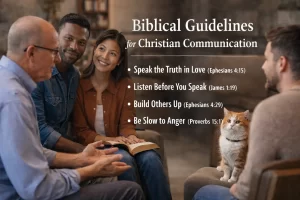
By Michael Mooney, NACM Exec. Elder How Ministers Should Speak Biblically Often we just go about life doing whatever we think is best. Many of our thought processes are automatic and do not enjoy very much careful thinking. A good example of this is driving a …

Read more

Email
Share
Tweet
Share
Pin
Flip
Categories Preaching Teaching Communication
National Association of Christian Ministers

Use of Strong’s Concordance

Words from the Word, and Other Words… By Michael Mooney, NACM Exec. Elder Preliminary Information   We will be introducing the use of Strong’s concordance in this presentation.  We realize that several of the things in this message will be unfamiliar to some and overly simple …

Read more

Email
Share
Tweet
Share
Pin
Flip
Categories Preaching Teaching Communication
Newer posts
← Previous Page1 … Page3 Page4

“To equip the saints for the work of ministry, for building up the body of Christ”  (Eph 4:12).

This is the official Manual to Ministry of the National Association of Christian Ministers.  Articles are added weekly.

Nothing on this site is offered for sale, profit, donation, or advertised.  This Publication is offered to the public for free to encourage the academic study of Christianity (2 Tim. 2:15).

Our statement of faith is located here.

National Association of Christian Ministers.  US Registered Service Mark.  All Rights Reserved. Copyright 2024.

What is the National Association of Christian Ministers?

A professional association of Christian Ministers with the vision to answer His call to Advance the Gospel and Unite the Body of Christ (John 17:23).  Learn more at https://nacministers.com/

© 2026 Ministry Manual • Built with GeneratePress

Copyright Notice.

All Rights Reserved.

All material appearing on the Ministry Manual website ("content") is protected by copyright under U.S. Copyright laws and is the property of Ministry Manual. You may not copy, reproduce, distribute, publish, display, perform, modify, create derivative works, transmit, or in any way exploit any such content, nor may you distribute any part of this content over any network, including a local area network, sell or offer it for sale, or use such content to construct any kind of database.